
Dentures · Coral Springs
Full and partial dentures — and a clear path if you want more.
Modern dentures look and fit far better than they used to. We’ll show you how a full or partial denture compares with implant-supported options, so you choose with the whole picture.
Schedule a visit Call or text 754-240-4820
Implant consultations complimentary · English & Spanish · Saturday hours
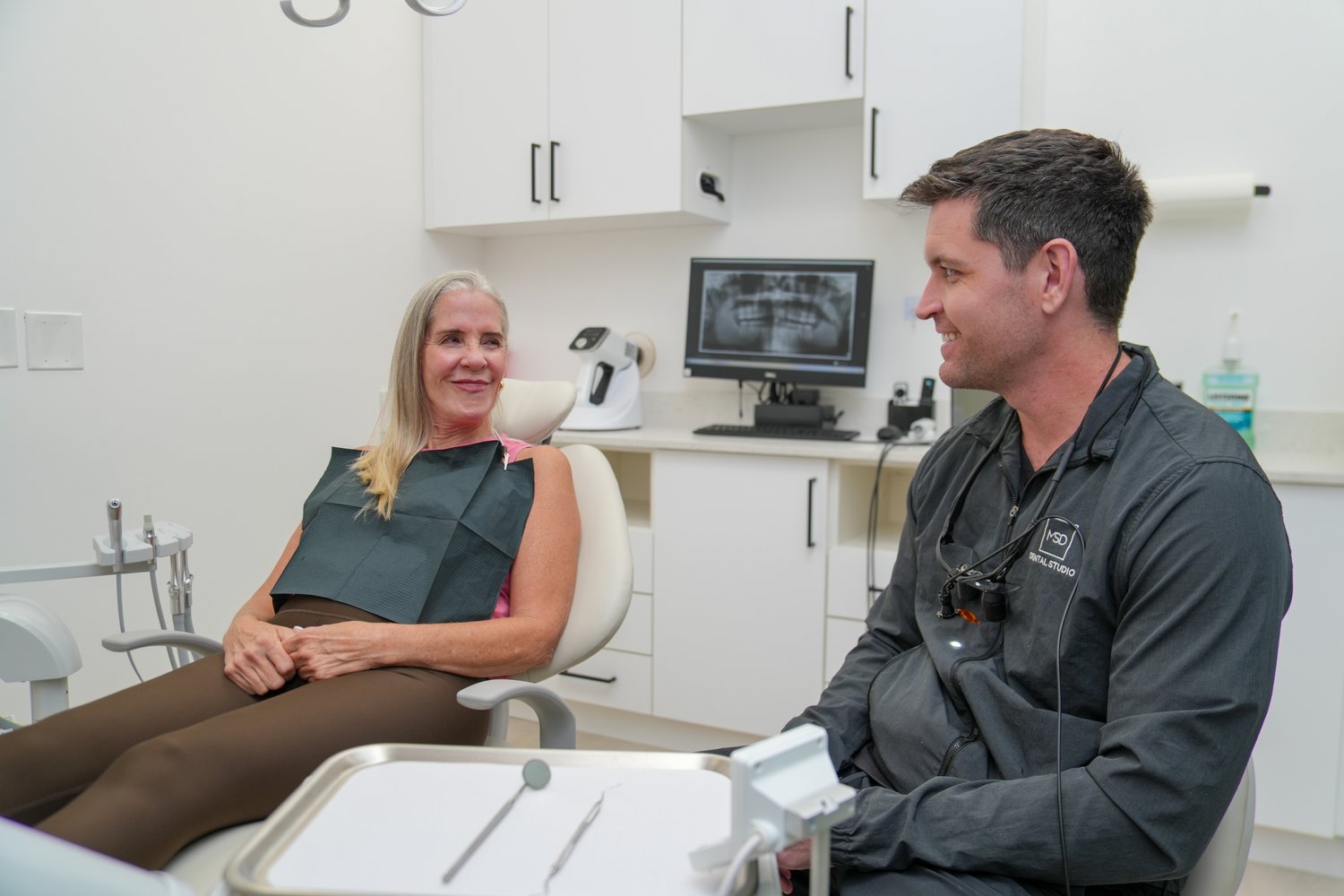
Part of our replacing missing teeth care.
Full or partial: which one you need
A full denture replaces all the teeth in an upper or lower arch. It rests on the gums; an upper denture is held largely by suction against the palate, while a lower denture has far less to hold onto — which is why lower dentures are the ones people struggle with most.
A partial denture replaces several missing teeth while keeping your healthy ones. It clips onto your remaining teeth, fills the gaps, and stops the neighboring teeth from drifting into the spaces.
How dentures compare
| Full denture | Partial denture | Implant-supported denture | |
|---|---|---|---|
| Replaces | All teeth in an arch | Several teeth, keeping healthy ones | All teeth in an arch |
| Held by | Fit and suction | Clasps on your natural teeth | Snaps onto 2–4 implants |
| Stability | Can shift, especially a lower | Good | Snaps in firmly |
| Slows bone loss? | No | No | Yes |
| Up-front cost | Lowest | Low to moderate | Higher |
Want teeth that never come out? See fixed full-arch (All-on-X).
When a few implants change everything
If a denture moves when you eat or talk, a few implants underneath can lock it in place. A snap-in implant-supported denture comes out for cleaning but stays put while you chew — and sometimes your current denture can be converted rather than replaced. Implant consultations, including the 3D scan, are complimentary.
Living with dentures: the honest version
- The first few weeks take practice. Expect a few sore spots, a short adjustment in speech, and softer foods to start. We see you back to adjust the fit.
- Your jaw keeps changing. Without tooth roots, the bone under a denture slowly shrinks, so dentures need relining every few years and eventually replacing.
- Daily care matters. Clean your denture every day, and take it out at night to give your gums a rest.
- Keep your checkups. We still check your gums, any remaining teeth, and screen for oral cancer.
What to expect, step by step
- 1
Exam & options
We check your gums, bone and remaining teeth, then lay out your options with an itemized price.
- 2
Treatment first
Any fillings, gum care or extractions your remaining teeth need, planned so you know what you’ll wear in between.
- 3
Records & design
Impressions or scans, your bite, and the shade and shape of your new teeth.
- 4
Try-in
You see and test the look, speech and bite before the denture is finished.
- 5
Delivery
We fit it, check your bite, and show you how to care for it.
- 6
Adjustments
Follow-up visits to smooth sore spots while you settle in.
Common misconceptions
- “Dentures last forever.” They wear, and your mouth changes. Relines and eventual replacement are normal.
- “Everyone can tell.” Well-made dentures are designed around your face and look natural.
- “A loose denture is just something you live with.” A reline, a new denture, or a few implants can fix it.
- “With dentures, I don’t need a dentist.” Your gums, remaining teeth and oral-cancer screenings still need regular care.
Related reading
Patient guides
- Snap-in or fixed implant teeth?
- Replacing several missing teeth
- Zirconia vs. acrylic full-arch teeth
Sources & further reading
- American Dental Association — Dentures — types of dentures and how to care for them.
Independent, authoritative references for the general topics on this page. See our editorial & clinical-review policy.
FAQ
Frequently asked questions
How much do dentures cost?
It depends on whether you need a full or partial denture, the materials, and any treatment your remaining teeth need first. We give you an itemized price at your visit, and check what your insurance covers.
Full or partial — how do I know which I need?
If you still have healthy teeth in an arch, a partial usually keeps them and fills the gaps. If all the teeth in an arch are missing or can’t be saved, a full denture or an implant-supported option is the answer.
How long do dentures last?
Dentures wear and your jaw slowly changes shape, so most need relining every few years and replacing eventually. We check the fit at your regular visits.
Can my current denture be made to snap in?
Often, yes. If your denture is in good shape and can accept attachments, we can add implants underneath and convert it — saving you the cost of a new one.
Will I be without teeth at any point?
We plan the sequence with you so you know exactly what you’ll wear while you heal. Ask us at your visit.
How long does it take to get used to dentures?
Most people settle in over a few weeks. Expect some sore spots and speech practice early on; we adjust the fit as you go.
Do you take insurance?
We work with many major PPO plans and will check your benefits for you. No dental insurance? Ask about our in-house membership plan.
¿Hablan español?
Sí. Nuestro equipo atiende en inglés y español, y le explicamos cada opción antes de comenzar.
Ready to eat and smile with confidence again?
A full or partial denture, or implants to hold it — we’ll lay out every option honestly, with an itemized plan.
Schedule a visit Or call or text 754-240-4820