
Dental Crowns · Coral Springs, FL
The right restoration for the right tooth.
A crown is one of the most predictable things dentistry can do for a structurally compromised tooth — and one of the most over-simplified topics on the internet. The real question is never "are crowns good or bad?" It's whether this tooth needs one. Sometimes it needs less. Sometimes a crown is exactly right. Here's how we decide.
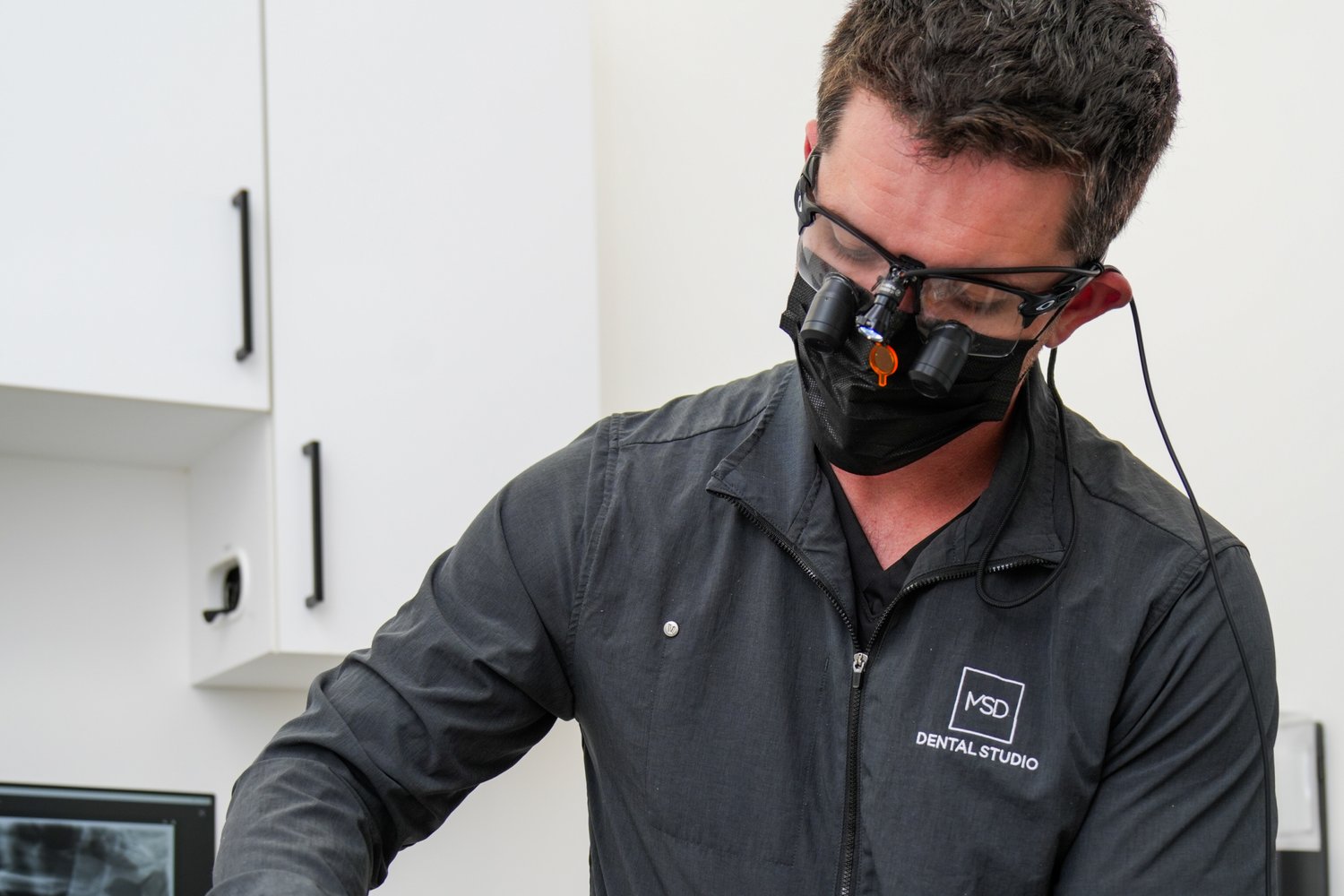
When is a dental crown the right choice? A crown is the most predictable option when a tooth has lost too much structure to protect any other way — extensive old restorations, significant fracture or decay, a root canal-treated back tooth, or heavy functional forces. When more sound structure remains, a filling or a bonded onlay may serve the tooth better. The decision is made tooth by tooth, on findings you can be shown.
What a crown actually does
A crown replaces the outer structure of a tooth with a continuous, engineered surface that distributes chewing force around the whole tooth instead of concentrating it on weakened walls. That's the job: protection under load. A tooth split by years of expansion and contraction around a large old filling, or hollowed by decay, can't be made whole by patching — the remaining walls flex, crack, and eventually fail. Full coverage stops that mechanism.
This is why crowns have such a long track record. Done on the right tooth, with the margins sealed and the bite adjusted correctly, a crown routinely serves for decades. Nothing about that is aggressive dentistry. It's structural engineering applied to a tooth that needs it.
When a crown is the most predictable option
- A tooth that is mostly filling. When old restorations occupy more of the tooth than natural structure does, the remaining walls are working beyond their strength.
- Significant fracture or cracks under load. A cracked back tooth that hurts on release of biting pressure is asking for circumferential protection before the crack propagates.
- Extensive decay. When removing the decay removes the structure a filling would need to hold onto.
- Root canal-treated back teeth. Molars and premolars flex under hundreds of pounds of force; after root canal treatment they're drier and more fracture-prone, and full coverage is the standard of care for good reason.
- Heavy functional forces. In a grinding or clenching mouth, a restoration that would survive in a gentle bite may need the durability only full coverage provides — one reason the bite evaluation is part of the crown decision. See how we evaluate wear and force.
When something smaller serves the tooth better
Crowning a tooth means shaping it — removing structure so the crown can fit and function. On the right tooth, that trade is clearly worth it. On a tooth with plenty of sound structure, it isn't, because tooth structure is the one thing dentistry can't give back.
When enough healthy wall remains, a bonded onlay covers and protects the damaged portion while leaving the sound portions untouched. When the problem is smaller still, a well-placed filling or bonding does the job. And an aging restoration with closed margins and no decay sometimes needs nothing but documented monitoring.
Our goal isn't to choose the smallest restoration or the largest one. It's to choose the appropriate one.
How that choice is actually made — the structural tests, the questions worth asking — is covered in our doctor-written guides: Do I actually need this crown?, Filling, onlay, or crown?, and, for larger plans, When multiple crowns are recommended.
Materials chosen for the case, not the drawer
Modern crowns span a real range — full ceramics prized for esthetics, zirconia for strength under heavy force, layered options in between, and newer in-office materials that open price points that didn't exist a few years ago. Each has a right situation: the material that's ideal for a front tooth in a gentle bite is not the automatic answer for a second molar in a grinding one. The mouth is a hostile environment — heat, acid, enzymes, and hundreds of pounds of force — and the material should be chosen for the case. We've written about exactly that in The Mouth Is a Hostile Environment.
Often in a single visit
With intraoral scanning and in-office design and fabrication, many crowns at MSD are made and placed the same day — no impression trays, and often no temporary or second appointment. Some cases still favor a laboratory-made restoration, and we'll tell you when yours is one of them. The full process is on our same-day crowns page.
What to expect
The decision, shown
Photos and imaging of the tooth, an honest read of remaining structure, and the reasoning for crown, onlay, or filling — visible on the screen, not asserted.
The tooth, prepared carefully
Numb, comfortable, and conservative — preserving what's sound, removing what's failed, building a foundation the crown can rely on.
The crown, engineered to your bite
Designed digitally, fitted and adjusted so force lands where it should — because a crown that fights the bite is a crown that fails early.
Who does this work
Crowns at MSD are planned and placed by Dr. Matthew Dillon and Dr. Shantall Di Loreto on N University Drive in Coral Springs. Dr. Dillon's advanced training (Kois Center; Mastership, Academy of General Dentistry) matters most on the teeth without one obvious answer — where crown, onlay, and monitoring are all defensible. When a single tooth is part of a larger pattern of breakdown, the decision belongs inside a comprehensive evaluation.
FAQ
Common questions about crowns
When is a dental crown the right choice?
A crown is the most predictable option when a tooth has lost too much structure to protect any other way — extensive old restorations, significant fracture or decay, a root canal-treated back tooth, or heavy functional forces. When more sound structure remains, a filling or a bonded onlay may serve the tooth better. The decision is made tooth by tooth, on findings you can be shown.
Does every root canal tooth need a crown?
Back teeth usually do — a root canal-treated molar without full-coverage protection has a substantially higher fracture risk under chewing forces. Front teeth are evaluated case by case: one with ample remaining structure can sometimes be restored more conservatively. The deciding factor is remaining tooth structure and the forces the tooth carries, not the root canal by itself.
How long do crowns last?
A well-made crown on a well-chosen tooth commonly serves ten to twenty years, and many serve longer. Longevity depends less on the crown than on its conditions: the health of the tooth underneath, your bite forces, gum health, and hygiene at the crown margin. That's why we treat the diagnosis, the bite, and the material choice as part of the crown — not extras.
Can I get my crown in one visit?
Often, yes. With in-office scanning and design, many crowns are made and placed the same day — often with no temporary and no second visit. Some situations still favor a laboratory-made crown, and we'll tell you when yours is one of them. See our same-day crowns page for how it works.
What is an onlay, and when is it better than a crown?
An onlay is a bonded restoration that covers and protects the damaged part of a tooth while leaving the healthy walls intact. When enough sound structure remains, an onlay protects the tooth with less removal of healthy enamel. When too little remains, a crown's full coverage is the more predictable choice. It's a structural decision, not a philosophy.
Related reading
- Why dentistry is different than you remember
- Do I actually need this crown?
- Filling, onlay, or crown?
- When multiple crowns are recommended
- Same-day crowns at MSD
- Complex restorative dentistry
Updated August 2026. Educational information, not a substitute for an in-person examination. See our editorial & clinical-review policy.
Been told you need a crown?
See why — on your own images, tooth by tooth — before anything begins.
Schedule a comprehensive exam Or call or text 754-240-4820