
Dental Implants · Coral Springs
Dental implants, planned in 3D and placed right here.
One tooth, several, or a full arch — Dr. Dillon plans every implant on a 3D scan, places it in our Coral Springs office, and restores it himself.
Schedule a complimentary consult Call or text 754-240-4820
Complimentary consultation · 3D scan & itemized plan · English & Spanish
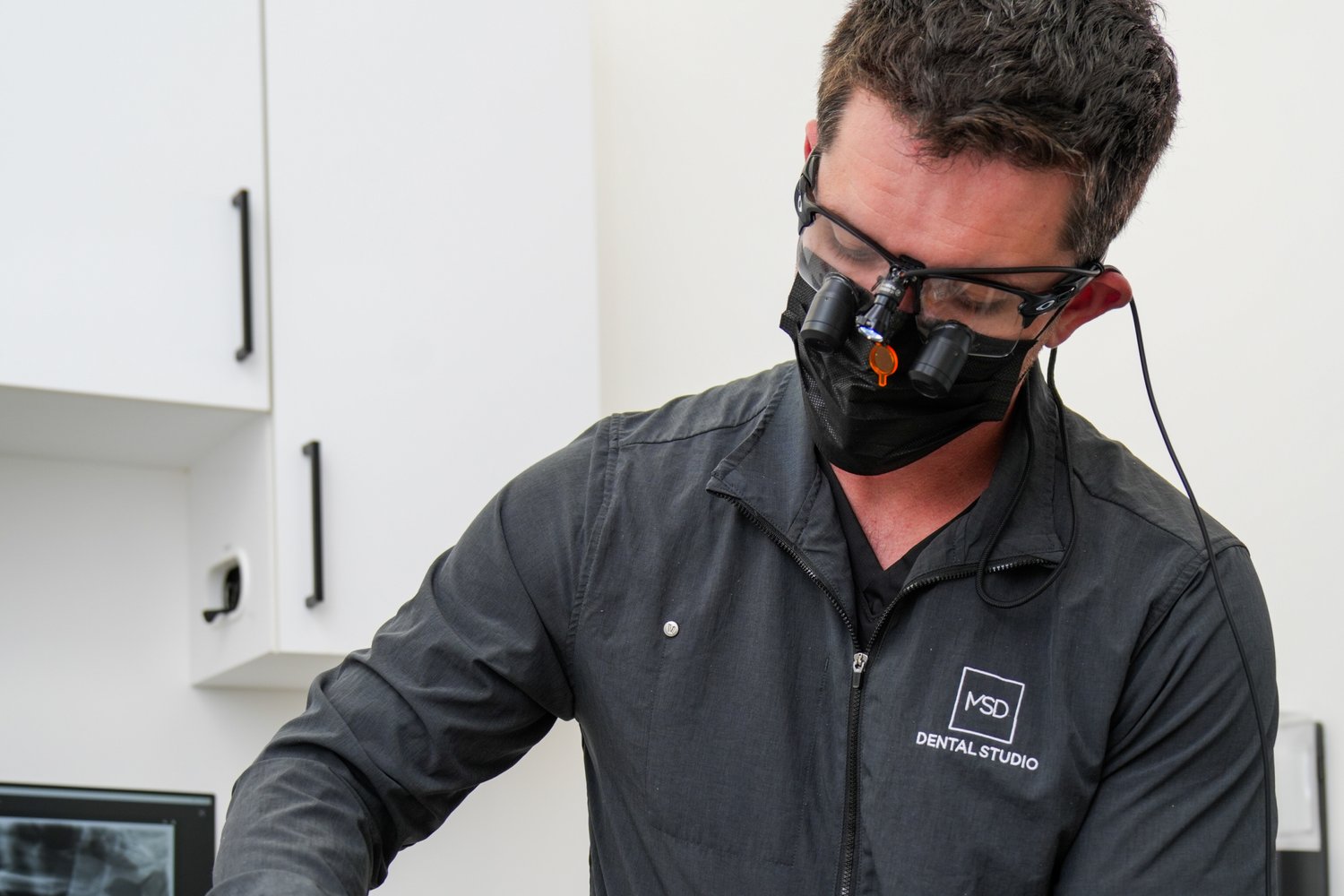
What a dental implant is
A dental implant replaces both parts of a missing tooth: a small titanium post replaces the root, and a custom crown replaces the tooth you see. Because it stands on its own, it doesn’t touch the neighboring teeth, and it helps preserve the jawbone that would otherwise slowly shrink where the root used to be. With good care, implants often last decades.
Here, one team plans, places, and restores your implant — and is here for the life of it. We use US-based, medical-grade implants and restorations made by local laboratories we trust, so you get continuity, accountability, and easy follow-up under one roof.
Which implant option fits your situation
| If you are… | The usual option | Learn more |
|---|---|---|
| Missing one tooth | A single implant with a custom crown | Single-tooth implant |
| Missing several teeth in a row | Individual implants, or an implant-supported bridge | Bridge vs. individual implants |
| Wearing a loose denture | A snap-in overdenture, usually on four implants per jaw | Implant-supported dentures |
| Losing most teeth in an arch | A fixed full-arch bridge on four to six implants | All-on-X full arch |
Not sure an implant is the right call at all? Our implant vs. bridge vs. denture comparison lays out every option honestly.
How we plan and place implants
- 3D CBCT planning. Every case is mapped in three dimensions — bone, nerves, sinuses, and the final tooth — before anything happens in your mouth.
- Guided placement, in-office. Dr. Dillon places implants in our Coral Springs office using 3D guidance for precision, with sedation available when it’s a good fit.
- Restored by the same team. The dentist who plans and places your implant also designs and fits the crown, bridge, or denture on top.
- Two doctors on complex cases. Dr. Dillon and Dr. Shantall plan difficult cases together — and when a specialist’s hands are the right call, we coordinate it rather than hand you off.
Who is a good candidate
Most people missing one or more teeth are candidates if they’re in reasonably good general health and have — or can rebuild — enough bone to anchor the implant. Age itself rarely rules anyone out; many patients in their 70s and 80s do very well.
We’ll slow down, or steer you toward a different option first, if you smoke heavily and won’t pause around surgery, have uncontrolled diabetes or active gum disease, or if a bridge or denture would simply serve your goals and budget better. You’ll hear that at the consult — not after you’ve paid for an implant.
What to expect, step by step
- Complimentary consult & 3D scan. We look at the site, the bone, and your neighboring teeth, and lay out your options.
- An itemized, all-in plan. Implant, abutment, crown, and any extraction or grafting — priced before anything begins.
- Preparation, if needed. An extraction or bone graft comes first when the site calls for it.
- Guided placement. Most people are back to normal life the next day.
- Healing. The implant fuses to the bone over about three to six months; a temporary can fill a visible gap.
- Final restoration. Your crown, bridge, or denture is fitted, checked against your bite, and finished to blend in.
What dental implants cost
The biggest driver is what the site needs before the implant — an extraction, or a bone graft where bone has shrunk. A complete price for a new tooth includes the implant post, the abutment, and the crown; be wary of single-number ads that cover only the post. Your consultation is complimentary, includes the 3D scan, and ends with an itemized, all-in figure before you commit. We’re in network with many PPO plans (including Delta Dental, Florida Blue, Humana and Guardian) and offer financing and an in-house membership plan. For the full picture, see our honest breakdown of implant costs.
Common misconceptions
- “Implants are just for older people.” The most common case we treat is a single failed or knocked-out tooth — at any age.
- “The procedure is unbearable.” Most patients say it was easier than the extraction before it.
- “All implants are the same.” Planning and placement accuracy — 3D-guided versus freehand — meaningfully affect long-term success.
- “An implant can’t have problems.” It can’t decay, but the gum and bone around it still need care, just like a natural tooth.
Related reading
Patient guides
- Implant, bridge, or leaving the gap
- Why implant quotes differ by thousands
- How implant planning works
- Save the tooth or replace it with an implant?
- What an implant tooth is made of
- Bone grafting & site preservation
Sources & further reading
- American Dental Association — Dental Implants — how an implant replaces the root and crown of a tooth.
- American Dental Association — Missing Teeth — ways to replace missing teeth.
Independent, authoritative references for the general topics on this page. See our editorial & clinical-review policy.
FAQ
Frequently asked questions
How much do dental implants cost in Coral Springs?
It depends mostly on whether the site needs an extraction or bone graft first, plus the restoration and materials. Your consultation is complimentary, includes a 3D scan, and ends with an itemized, all-in price — implant, abutment, crown, and any site work — before treatment begins. Financing and an in-house membership plan are available.
Who places the implant — a specialist or my dentist?
Dr. Dillon plans, places, and restores implants here in our office. He holds a Fellowship in the International Congress of Oral Implantologists (FICOI) and a Mastership in the Academy of General Dentistry (MAGD). For the rare case that calls for a specialist, we coordinate that care and stay involved.
Does getting a dental implant hurt?
Most patients find it far easier than expected — often easier than the extraction that preceded it. Placement is 3D-guided and done with the area fully numb, and sedation is available. Expect mild soreness for a few days.
How long does the implant process take?
After placement, an implant typically needs about three to six months to fuse to the bone before the final crown. If an extraction or bone graft is needed first, add healing time for that. We lay out your expected timeline at the consult.
How long do dental implants last?
With good hygiene and regular checkups, implants often last decades. The implant can't get a cavity, but the gum and bone around it still need care.
Am I too old for a dental implant?
Age rarely rules out an implant — overall health matters far more. Many patients in their 70s and 80s do very well. There's a lower age limit, usually around 18, once the jaw has finished growing.
Does insurance cover dental implants?
Often partially — plans more commonly contribute to the crown or the extraction than to the implant itself. We check your benefits before treatment, give you an itemized estimate, and offer financing and an in-house membership plan.
Can I get a tooth the same day?
Some cases qualify for a same-day temporary, especially full-arch treatment. Single back teeth more often heal first and then receive the final crown. We'll tell you honestly at the consult whether your case qualifies.
¿Hablan español?
Sí. La Dra. Shantall y nuestro equipo atienden en inglés y español, y le explicamos cada opción en un escáner 3D antes de decidir.
Ready to replace a missing tooth — or several?
Your implant consultation is complimentary — a 3D scan, a clear plan, and an itemized price, with no obligation.
Schedule a complimentary implant consult Or call or text 754-240-4820