
Gum Disease Treatment · Coral Springs
Gum care based on measurements you can see.
Deep cleaning and periodontal therapy only when your gum measurements and X-rays show it’s needed — and we show you the numbers before we recommend anything.
Schedule a visit Call or text 754-240-4820
New patients: $100 credit toward your first cleaning or gum treatment · English & Spanish
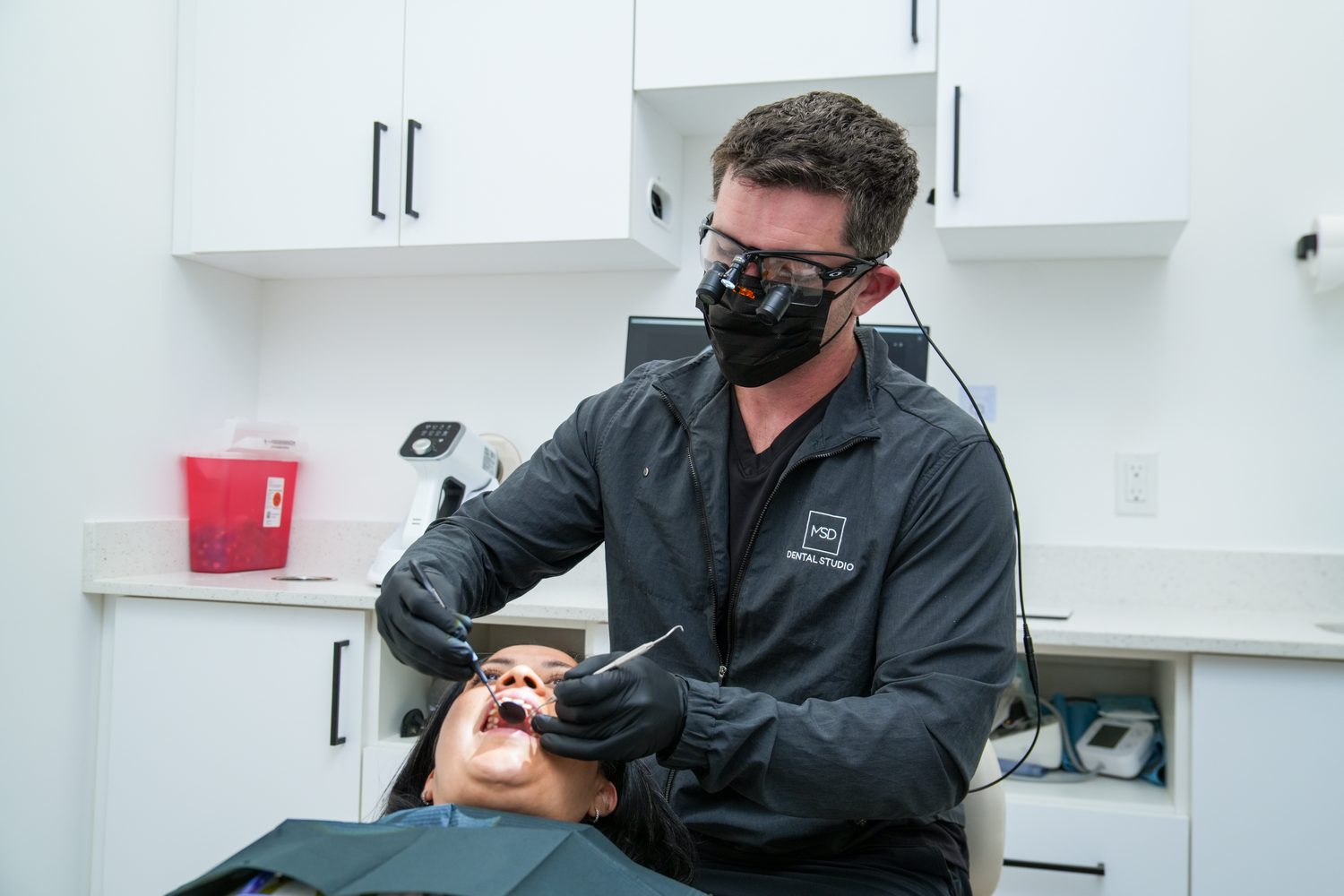
Is it gum disease? The signs
- Gums that bleed when you brush or floss
- Red, swollen or tender gums
- Gums pulling away from the teeth, or teeth that look longer
- Bad breath or a bad taste that doesn’t go away
- Loose teeth, or a change in how your teeth fit together
- Sensitivity near the gumline — see tooth pain & sensitivity
Gum disease is often painless, which is why it’s easy to miss. The early stage, gingivitis, is reversible. Periodontitis — where the gum’s attachment to the tooth and some supporting bone have been lost — can be brought under control, but lost bone doesn’t grow back on its own. That’s why catching it early matters.
How we diagnose it — and show you
Unlike many dental recommendations, this one rests on measurements you can see:
- Pocket depths. We measure six points around every tooth. Healthy readings are 1 to 3 millimeters; pockets of 4 millimeters and deeper are the finding.
- Bleeding. Healthy gums don’t bleed when gently measured.
- Bone level. X-rays show whether the bone around the teeth has been lost.
You’re entitled to see your own chart and X-rays, and we’ll walk you through them. Dr. Shantall explains more in Do I actually need a deep cleaning?
Which cleaning do you actually need?
| Regular cleaning | Gingivitis cleaning | Deep cleaning | Periodontal maintenance | |
|---|---|---|---|---|
| Who it’s for | Healthy gums | Inflamed gums, no bone loss | Pockets of 4 mm+ with bleeding and bone loss | After a deep cleaning, to keep it stable |
| What it involves | Cleaning above and just below the gumline | A more thorough cleaning of inflamed areas | Scaling and root planing inside the pockets, with numbing | Thorough cleaning below the gumline and re-measuring |
| How often | Usually every six months | Then back to regular cleanings once healthy | Once, then re-evaluated | Every three to four months |
What a deep cleaning involves
Scaling and root planing removes hardened deposits and bacteria from the root surfaces inside the pockets, then smooths them so the gum can heal and tighten against the tooth. The area is numbed, and treatment is usually split across two visits, half the mouth at a time.
We treat only the areas that need it. When the disease is in a few spots, whole-mouth treatment would be over-treatment. Afterward your gums may be tender and a little sensitive for a few days — here’s what to expect after a deep cleaning. A few weeks later we re-measure, so you can see whether the pockets have improved.
Keeping it stable
Gum disease is controlled, not cured, so the follow-up matters as much as the treatment. Most patients move to periodontal maintenance every three to four months — the interval that actually keeps it stable. Smoking and diabetes make gum disease harder to control, and gum health is tied to the rest of your health; more in Gum disease isn’t just a dental issue.
For advanced gum disease that needs specialist care, we refer you to a periodontist and stay involved — coordinated, not handed off and forgotten.
New patients
$100 toward your first gum treatment
Your first visit is $79: a comprehensive exam, the X-rays it calls for, and gum measurements around every tooth. If you need a cleaning or gum treatment, it’s scheduled separately — and a $100 credit applies to your first one.
For new patients without dental insurance. Your exam shows which type of cleaning you need. New patient details
Common misconceptions
- “Bleeding gums are normal.” They’re common, not normal. Bleeding is the earliest sign of inflammation.
- “A deep cleaning is just an upsell.” It’s diagnosed from measurements and X-rays — and we show you those numbers.
- “A deep cleaning makes teeth loose.” It doesn’t. Occasionally a tooth that was already loose feels it more once the hardened deposits around it are gone.
- “Once it’s treated, it’s gone.” Gum disease can be controlled, but it needs regular maintenance to stay that way.
Related reading
Patient guides
- Do I actually need a deep cleaning?
- After a deep cleaning: what to expect
- Bleeding gums and gum disease
Sources & further reading
- American Dental Association — Gum Disease — causes, signs and treatment.
Independent, authoritative references for the general topics on this page. See our editorial & clinical-review policy.
FAQ
Frequently asked questions
What is a deep cleaning?
A deep cleaning — scaling and root planing — cleans the root surfaces inside gum pockets that have formed because the gum has detached from the tooth. A regular cleaning maintains gums that are still attached. They treat different conditions.
How do I know I really need one?
Ask to see three things: your pocket measurements, where your gums bleed, and your bone levels on X-rays. Pockets of 4 millimeters or deeper with bleeding and bone loss support the recommendation. We show you all three.
Does a deep cleaning hurt?
The area is numbed, so most patients feel pressure rather than pain. Gums can be tender for a few days afterward.
How many visits does it take?
Usually two, half the mouth at a time, followed by a re-check a few weeks later. If only a few areas need it, it can be less.
Will my insurance cover it?
Many dental plans cover part of scaling and root planing. We’ll check your benefits for you. No dental insurance? Ask about our in-house membership plan.
How does the $100 new-patient credit work?
For new patients without dental insurance, the first visit is $79 for the exam and X-rays. If you need a cleaning or gum treatment, it’s scheduled separately, and a $100 credit applies to your first one.
How often will I need cleanings afterward?
Most patients do best with periodontal maintenance every three to four months. We’ll adjust the interval based on your measurements.
¿Hablan español?
Sí. Nuestro equipo atiende en inglés y español, y le mostramos sus medidas antes de recomendar cualquier tratamiento.
Bleeding gums? Let’s measure, not guess.
A thorough exam, gum measurements around every tooth, and a plan you can see the reasons for.
Schedule a visit Or call or text 754-240-4820