
Restorative Dentistry
A damaged tooth doesn’t always need a crown.
Fillings, conservative onlays, and same-day crowns — we rebuild teeth with the least dentistry that will actually last, and show you why.
Schedule an evaluation Call or text 754-240-4820
Complimentary consultation · Many repairs in one visit · English & Spanish
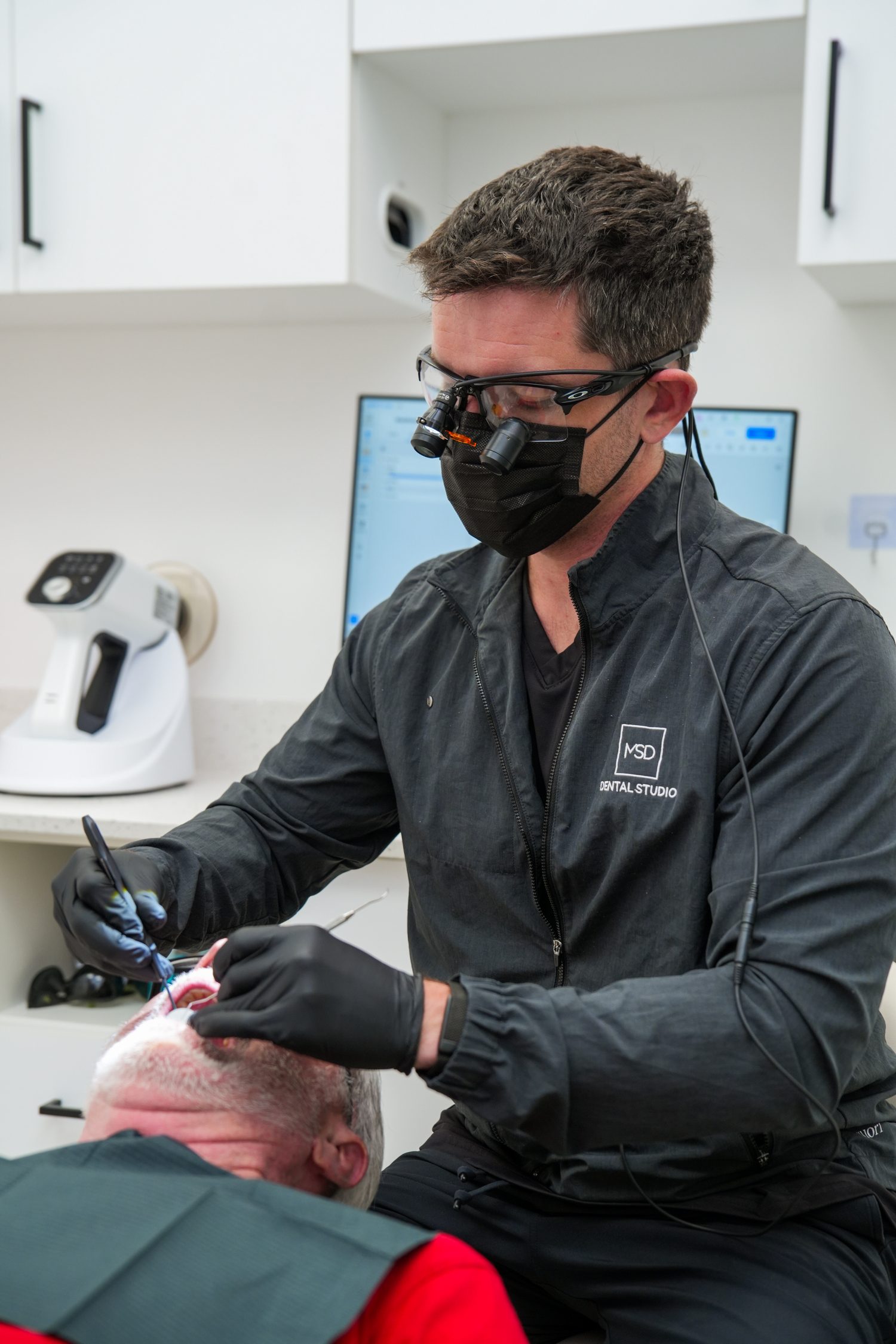
Crown, onlay, or filling — how we decide
Most patients are never told there’s a choice here. There is, and it matters — because the more natural tooth we keep, the healthier that tooth usually stays. Here’s the honest framework:
- A filling when the damage is small and the tooth still has plenty of strong structure.
- A bonded inlay or onlay when a tooth is cracked or has lost a cusp but much of it is still healthy — we cover and protect the weak part without crowning the whole tooth.
- A full crown when a tooth is extensively broken down, root-canal-treated, or otherwise needs full coverage to survive.
- A root canal first (sometimes referred) when the nerve inside the tooth is infected or damaged — then we rebuild the outside.
- Watchful waiting when a small crack or worn spot is stable — we photograph it, monitor it, and act only if it changes.
Whatever we recommend, we’ll show you exactly why — the same images and reasoning we used to get there.
When a full crown is too much: bonded inlays & onlays
A cracked or heavily filled tooth doesn’t always need a full crown. Often we can rebuild just the damaged part with a bonded inlay or onlay — a precise, tooth-colored restoration that covers only what’s necessary and preserves the healthy tooth structure a crown would otherwise grind away.
These partial-coverage restorations are more technique-sensitive and take more chair time, which is why relatively few general practices routinely offer them — we’re one that does. When it’s the right call, an onlay keeps more of your natural tooth, which usually means a stronger, longer-lasting result.
Filling vs. onlay vs. crown — a side-by-side
| Filling | Inlay / onlay | Crown | |
|---|---|---|---|
| Covers | A small area within the tooth | Part of the tooth, incl. a cusp (onlay) | The entire tooth |
| Natural tooth kept | Most | More than a crown | Least |
| Best when | Damage is small, tooth is strong | Cracked or a lost cusp, but mostly healthy | Extensively broken down or root-canaled |
| Same-day? | Yes | Often | Often (most back teeth) |
| Typical longevity | Many years | Many years | Many years |
| Relative cost | Lowest | Middle | Highest |
What to expect, step by step
- Evaluation. We look at the tooth with digital photos and X-rays, check how it fits your bite, and pinpoint what’s actually going on.
- Diagnosis & options. We show you the images, explain filling vs. onlay vs. crown for your tooth, and give an itemized number before we begin.
- Gentle preparation. We remove only the damaged part, using air abrasion and electric handpieces to keep it comfortable and precise.
- Same-day design & fit. For many crowns and onlays, we scan, design, and mill the restoration in-office and bond it the same day, usually with no temporary and no second trip.
- Bite check & finish. We adjust and polish so it feels like your own tooth when you bite and chew.
- Follow-up. We make sure it settled in comfortably and folds into your regular checkups.
Sensitivity
How we prevent sensitivity
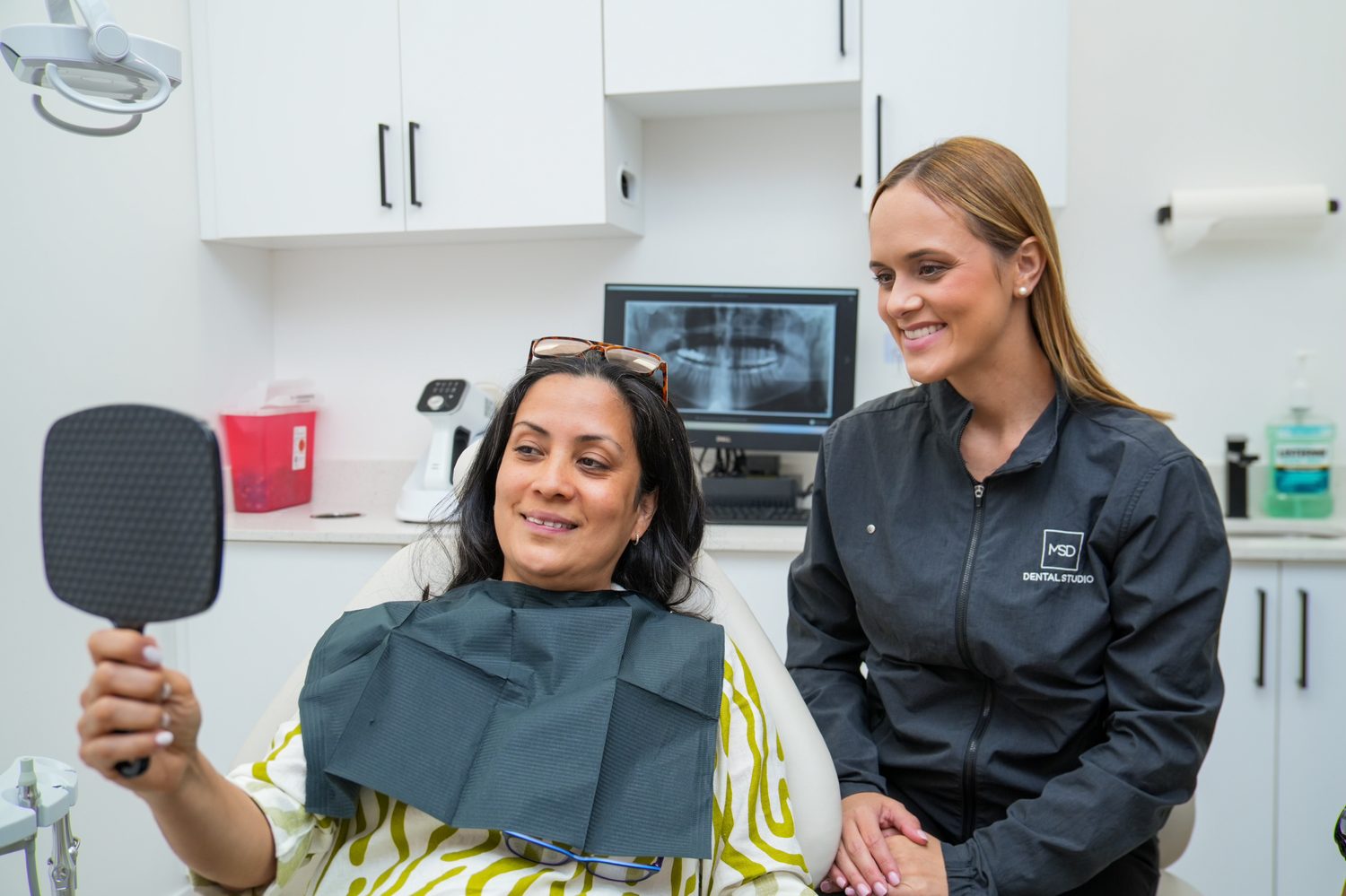
Sensitivity after a filling is largely preventable. But preventing it takes extra time and the right equipment, so many offices skip the steps that make the difference. We don’t — we built them into every restoration as our standard, not an add-on.
We prepare teeth gently with aluminum oxide air abrasion (PrepStart) and electric handpieces — which cut smoothly, with less heat and vibration than air-driven drills — keep the tooth carefully isolated and dry, and follow a meticulous bonding protocol every time. The payoff is a stronger, cleaner seal, and far less of the post-treatment sensitivity people have come to expect.
We also treat patient safety as sacred, right down to the details you can’t see. We purify our water with a VistaPure system and routinely flush our waterlines, so what reaches your mouth is as clean as the care around it.
A note from Dr. Dillon
A lot of the sensitivity I see in new patients traces back to how a previous filling was placed — not the tooth itself. Doing it right the first time costs us a little more chair time, and it saves you the zingers. To me that’s an easy trade.
I’ll be honest, too: not all sensitivity can be prevented — some of it is simply part of how a tooth responds and heals. What I can promise is that we do everything in our control to keep it to a minimum.
— Dr. Matthew Dillon, DDS, MAGD
Common misconceptions
- “A cracked tooth that doesn’t hurt is fine.” Cracks are usually painless until they aren’t. Caught early, many are protected with an onlay instead of a crown.
- “Silver fillings should always be replaced.” Only when they’re failing. Swapping a sealed, intact filling for color alone removes healthy tooth for little gain.
- “Same-day crowns are lower quality.” For most back teeth they’re milled from a solid ceramic block and fit beautifully. Front-tooth cosmetics can still favor a lab.
- “Sensitivity after a filling is just normal.” Some is unavoidable, but most traces back to technique — and is preventable.
- “It’s just one tooth.” How one tooth is rebuilt affects the whole bite. We plan the repair around how your teeth work together.
Related reading
Each type of restorative care
- Same-day crowns — a permanent, milled-in-office crown in a single visit.
- Full-mouth reconstruction — rebuilding a worn or broken-down bite, planned honestly and never rushed.
- Replacing missing teeth — implants, bridges, and dentures, explained.
Related care: emergency care for a broken tooth or toothache, preventive care to catch problems while they’re small, and smile design when a repair is also a cosmetic goal.
Watch
A bonded restoration, up close
Sources & further reading
- American Dental Association — Dental Crowns — when a crown is the right restoration.
- American Dental Association — Dental Filling Options — types of fillings and materials.
- American Dental Association — Tooth-Colored Fillings — composite, tooth-colored fillings.
Independent, authoritative references for the general topics on this page. See our editorial & clinical-review policy.
Patient guides — how the decision is made
Doctor-reviewed guides that walk through the choices on this page in plain language:
FAQ
Frequently asked questions
Do I always need a crown, or could an inlay or onlay work?
Not always. When a tooth is cracked or has lost a cusp but much of it is still healthy, a bonded inlay or onlay can protect the weak part while preserving the healthy tooth a full crown would grind away. We use the most conservative option that will actually last — and show you why.
How much does a crown cost in Coral Springs?
It varies with the case — the tooth, how much damage there is, your goals, and the lab and materials we use — so we don't quote a one-size figure. You get an itemized number before we begin, and we can review insurance and our in-house membership plan.
Can I really get a crown in one visit?
Often, yes — we design and mill many crowns in-office the same day, so you skip the temporary and the second appointment. Some cosmetic front-tooth cases are still better made in a lab, and we'll tell you which yours is.
Will the repair hurt?
We prepare teeth gently with air abrasion and electric handpieces and follow a meticulous bonding protocol, which prevents much of the post-treatment sensitivity people expect. We'll also talk through comfort options, including sedation, before anything begins.
How long do crowns and onlays last?
With good care, modern crowns and bonded onlays last many years. We plan each one around your whole bite so it holds up — and preserving more natural tooth (an onlay) often means a healthier tooth long-term.
Should I replace my old silver (amalgam) fillings?
Not just because they're silver. If an amalgam filling is intact and sealed, replacing it only to change the color removes healthy tooth for little benefit. We replace one when it's cracked, leaking, decayed underneath, or the tooth is at risk — and we'll tell you honestly which is the case.
My tooth is cracked but doesn't hurt — do I need to fix it?
Often yes, before it worsens. A crack that's caught early can sometimes be protected with an onlay; left alone, it can deepen until the tooth splits and needs a crown, a root canal, or removal. We'll show you the crack on a photo and explain the risk honestly.
Does insurance cover crowns and fillings?
Most PPO plans cover part of fillings and crowns, subject to your annual maximum. We check your benefits before treatment and give an itemized estimate, and we offer financing and an in-house membership plan if you're uninsured.
¿Hablan español?
Sí. La Dra. Shantall y nuestro equipo atienden en inglés y español, y le mostramos exactamente por qué recomendamos cada reparación.
More doctor-reviewed guides on this and related decisions: browse the patient guide library →
Not sure if it needs a filling, an onlay, or a crown?
That’s exactly what an evaluation is for. We’ll show you what we see and give you a clear number — many repairs finished the same visit.
Schedule an evaluation Or call or text 754-240-4820