
Replacing Missing Teeth
Missing a tooth? Here’s how to choose the right way to replace it.
Implant, bridge, or denture — we explain every option honestly, help you weigh them, and only recommend what your mouth actually needs.
Schedule your complimentary tooth-replacement consult Call or text 754-240-4820
Complimentary consultation · 3D scan & itemized plan · English & Spanish
How we decide what to recommend
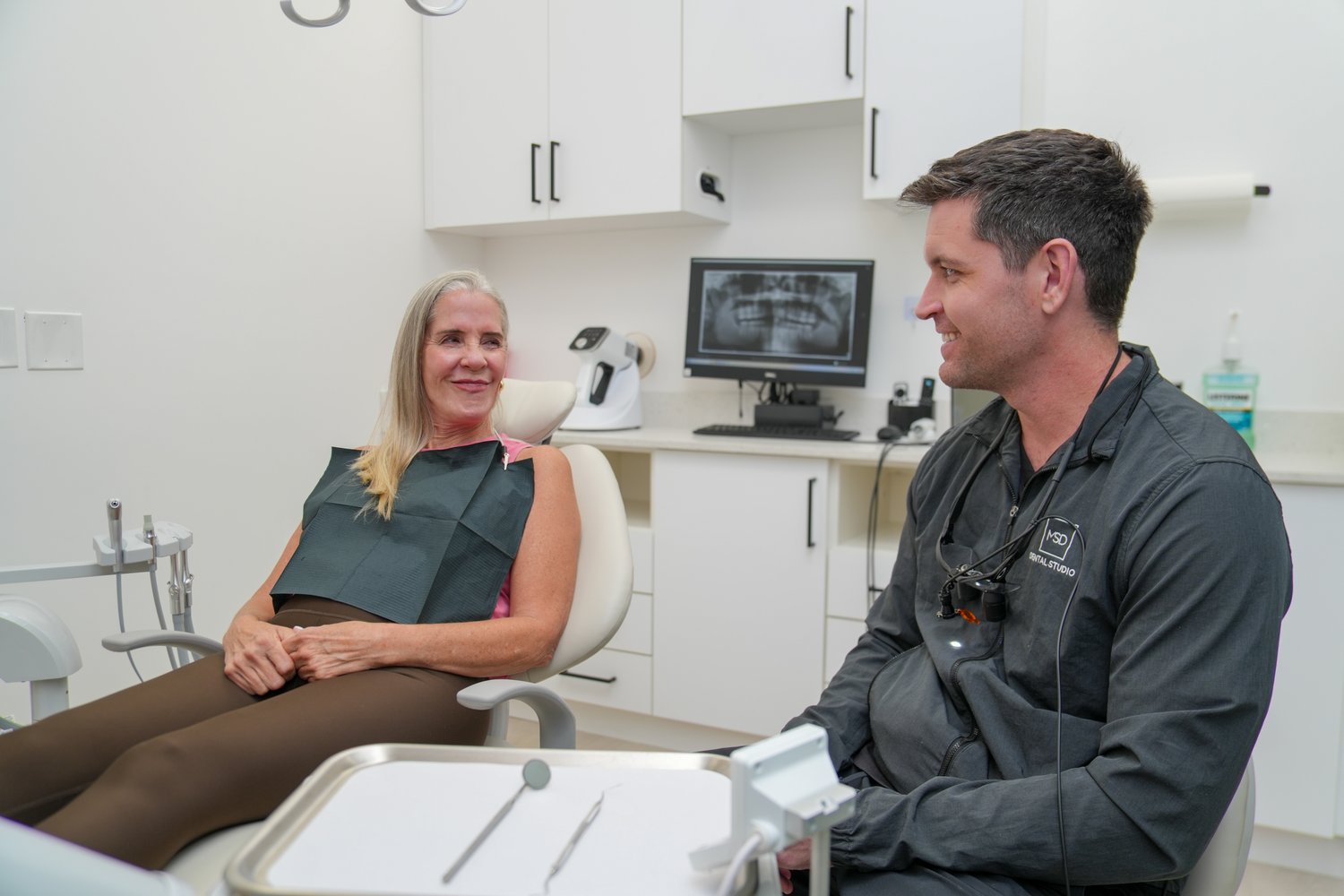
Before we suggest anything, we weigh four things: how many teeth are missing and where, the health of the bone and gums around the gap, your medical history, and your goals and budget. Here’s the honest framework:
- When an implant is usually the best call — a single missing tooth with healthy neighbors, or several gaps where you want to avoid grinding down good teeth. An implant stands on its own and preserves the bone.
- When a bridge often makes more sense — the teeth on both sides of the gap already need crowns, or you want a fixed replacement faster and at a lower up-front cost. You treat everything in one plan.
- When a denture — or an implant-supported denture — fits best — many or all teeth in an arch are missing, or budget is the priority. A few implants can turn a loose denture into one that stays put.
- When we’d watch and wait — a back tooth with no shifting, or a mouth that needs gum or decay treatment first. We stabilize the foundation before we build on it.
- When we refer — if a case calls for a specialist’s hands (complex grafting, certain medical situations), we say so and coordinate it, rather than stretch beyond what serves you best.
Whatever we recommend, you’ll understand why — and you’ll see the same reasoning we used to get there.
Your options, explained
Dental implant
A small titanium post replaces the root, and a custom crown replaces the tooth. It’s the closest thing to a natural tooth: it stands alone, doesn’t touch the neighbors, and preserves the jawbone. Best for most single missing teeth and for people who want the longest-lasting result. The trade-offs are a higher up-front cost and a healing period while it fuses to the bone. More on single-tooth implants →
Fixed bridge
A row of connected crowns fills the gap, anchored to the teeth on either side. It’s fixed (not removable), often faster, and lower up-front cost than an implant. The trade-off: the supporting teeth are reshaped, and the bone under the gap isn’t preserved. A strong choice when those neighbors already need crowns.
Denture & implant-supported denture
Modern removable dentures fit and look far better than they used to, and they’re the most economical way to replace many teeth. Their limit is stability. Adding just a few implants — an implant-supported (snap-in) overdenture — locks the denture in place so you can chew confidently again.
Full-arch fixed teeth (All-on-X)
When an entire upper or lower arch is failing, a fixed bridge on four to six implants replaces the whole arch with teeth that don’t come out. See how full-arch treatment works →
Doing nothing (for now)
Sometimes reasonable — usually not ideal. For a back molar with no drifting, monitoring can be fine. We’ll tell you honestly what waiting may cost you later, so it’s a choice you make with the full picture.
Implant vs. bridge vs. denture — a side-by-side
Patients tell us a simple comparison makes the decision click. Here’s how the three most common options stack up:
| Dental implant | Fixed bridge | Denture | |
|---|---|---|---|
| What it is | A titanium root + crown replacing one tooth | Connected crowns anchored to neighboring teeth | A removable set of teeth on a gum-colored base |
| Touches healthy teeth? | No | Yes — reshapes both neighbors | No (may clasp onto them) |
| Preserves jawbone? | Yes | No, under the gap | No |
| Feels like | A natural tooth | Fixed and stable | Removable; can move while eating |
| Typical longevity | Decades, often a lifetime | Around 10–15 years | 5–10 years; relines over time |
| Upkeep | Brush & floss like a tooth | Special flossing under the bridge | Remove & clean daily |
| Up-front cost | Highest | Middle | Lowest |
| Best for | Most single gaps; preserving bone | Neighbors already needing crowns | Many teeth missing; budget priority |
Replacing now vs. waiting
| Replace sooner | Wait a long time | |
|---|---|---|
| Jawbone | Preserved by an implant | Gradually shrinks in the gap |
| Neighboring teeth | Stay in position | Can tip or drift into the space |
| Later treatment | Usually straightforward | May need grafting or more work |
| Overall cost | Often lower over time | Can rise as the case grows complex |
What to expect, step by step
- Complimentary consultation & 3D scan. We take digital photos and a CBCT scan, and listen to what matters to you. No cost, no obligation.
- Diagnosis & options. We show you the images, walk through every reasonable option, and hand you an itemized, all-in number — before anything begins.
- Preparation, if needed. An extraction or bone graft comes first when the site calls for it. You’ll know this up front, not as a surprise.
- Placement. The implant is placed with 3D guidance in our office, with sedation available. Most people return to normal life the next day.
- Healing & integration. The implant fuses to the bone over about three to six months. You wear a temporary if the tooth shows when you smile.
- Final restoration. Your custom crown, bridge, or denture is fitted, checked against your bite, and finished to blend with your other teeth.
- Maintenance. Regular cleanings and checkups keep the gum and bone around it healthy — the same care that protects your natural teeth.
A note from Dr. Dillon
A lot of patients walk in convinced that replacing a tooth will be a long, intimidating ordeal. Almost always, it’s far simpler than they feared. Implants in particular sound scarier than they are — I place and restore them right here, with 3D planning for precision and sedation available when it’s a good fit.
What matters most to me is doing only what you actually need. Often an implant is the ideal option — the closest thing to a natural tooth — but anatomy, medical history, and life obligations all factor in, and sometimes a bridge or denture is the more sensible call. I’ll lay out every option — the time, the cost, the upkeep — and help you choose with the full picture in front of you.
— Dr. Matthew Dillon, DDS, MAGD
Who a dental implant is right for
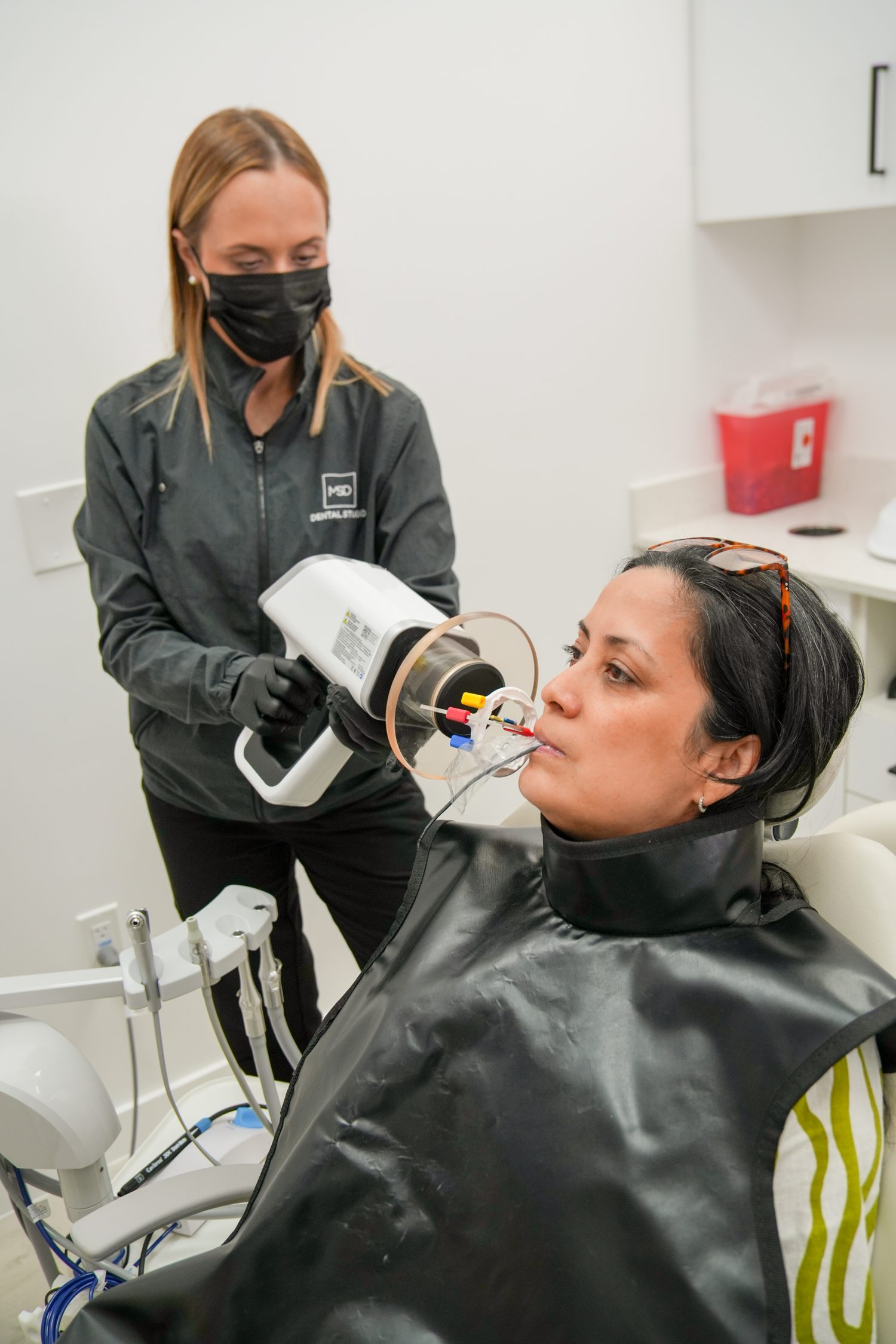
You’re likely a strong candidate if you’re missing one or more teeth — or facing an extraction — you’re in reasonably good general health, and you have (or can rebuild) enough bone to anchor the implant securely. Implants suit people who want the closest thing to a natural tooth: something that stands on its own without grinding down the neighbors and can last decades with normal care.
Who is not an ideal candidate — our honest take
We’ll slow down, or steer you toward a different option first, if any of these apply:
- Heavy smoking you’re not willing to pause around surgery — it’s one of the biggest causes of implant failure, and we won’t pretend otherwise.
- Uncontrolled diabetes or active gum disease — we treat the foundation first; placing an implant into inflammation sets it up to fail.
- Still growing (usually under about 18) — the jaw isn’t ready.
- Budget is the priority and the gap is bounded by healthy teeth — a bridge may serve you better, and we’ll say so.
If an implant isn’t right for you, you’ll hear it at the consult — not after you’ve paid for one.
What it costs — and what actually drives the number
The biggest factor is whether the site needs work before the implant. A straightforward case — implant, abutment, and crown — is the most affordable scenario. When a tooth has to be removed first, or the bone needs grafting to hold the implant securely, that’s added, planned work we price as part of your specific case. Pricing also depends on the restoration your case calls for and the lab and materials we choose. Rather than quote a one-size figure that could mislead you, we price it around your mouth.
Your consultation is complimentary. We take a 3D scan, tell you exactly whether grafting or extraction is needed, and hand you an itemized, all-in figure before anything begins — no surprise line items. Ask us about financing and our in-house membership plan, and see our honest breakdown of what implants cost.
Common misconceptions
- “Implants are just for older people.” The most common case we treat is a single failed or knocked-out tooth — at any age.
- “The procedure is unbearable.” Most patients say it was easier than the extraction that preceded it.
- “Implants can get cavities.” The implant can’t decay — but the gum around it still needs care, so hygiene matters as much as with a natural tooth.
- “All implants are the same.” Planning and placement accuracy — 3D-guided versus freehand — meaningfully affect long-term success.
- “A bridge is always cheaper, so it’s the better deal.” Lower up-front, sometimes — but it may need replacing sooner and doesn’t preserve bone. We’ll compare the long game with you.
- “If it doesn’t hurt, I don’t need to replace it.” Drifting and bone loss are usually painless — which is exactly why waiting can quietly make things harder.
Related reading
Each option in depth
- Dental implants in Coral Springs — how we plan, place, and restore implants, from one tooth to a full arch.
- Single-tooth implant — replacing one failed or missing tooth without touching the neighbors.
- All-on-X full-arch implants — a fixed bridge of teeth for a whole upper or lower arch.
- Implant-supported dentures — a snap-in overdenture that finally stays put.
- What implants cost — an honest breakdown of what actually drives the price.
Related care: restorative dentistry for damaged teeth worth saving, emergency care for a knocked-out or broken tooth, and smile design when replacement is part of a bigger cosmetic goal.
Watch
How tooth replacement works
Sources & further reading
- American Dental Association — Missing Teeth — an overview of ways to replace missing teeth.
- American Dental Association — Dental Implants — how an implant replaces the root and crown of a tooth.
- American Dental Association — Dental Bridges — fixed bridges as a replacement option.
Independent, authoritative references for the general topics on this page. See our editorial & clinical-review policy.
Patient guides — how the decision is made
Doctor-reviewed guides that walk through the choices on this page in plain language:
FAQ
Frequently asked questions
How much do dental implants cost in Coral Springs?
It depends mostly on whether the site needs an extraction or bone graft before the implant, plus the restoration and materials. Your consultation is complimentary and includes a 3D scan and an itemized, all-in price before any treatment begins. Financing and an in-house membership plan are available.
Am I too old for a dental implant?
Age itself rarely rules out an implant. Health matters far more than age — many patients in their 70s and 80s do very well. There’s a lower age limit (usually about 18, once the jaw finishes growing), but no real upper one.
Are dental implants painful?
Most patients find it far easier than expected — often easier than the extraction that preceded it. Placement is 3D-planned and guided, done in our Coral Springs office, and sedation is available when it’s a good fit. Expect mild soreness for a few days, managed with over-the-counter medication.
How long do dental implants last?
With good hygiene and regular checkups, dental implants often last decades, and many last a lifetime. The implant itself can’t get a cavity, but the gum and bone around it still need care to prevent peri-implantitis.
How long does the whole implant process take?
After placement, the implant typically needs about three to six months to fuse to the bone before the final crown is attached. If an extraction or bone graft is needed first, add healing time for that. Most people return to normal daily life the next day.
Can I get a replacement tooth the same day?
Some cases qualify for a same-day temporary, especially for full-arch treatment. Single back teeth more often heal first, then receive the final crown. We tell you honestly at the consult whether your case qualifies.
Does dental insurance cover tooth replacement?
Many PPO plans cover part of a bridge or denture, and some contribute toward implants. Coverage and annual maximums vary widely. We check your benefits before treatment and give you an itemized estimate, and we offer financing and an in-house membership plan if you’re uninsured.
Do dental implants ever fail, and why?
Implants are highly successful, but failure can happen — most often from smoking, uncontrolled diabetes, gum infection around the implant, or placing into inadequate bone. Careful 3D planning and treating the foundation first are how we keep that risk low, which is exactly why we don’t rush.
Will a replacement tooth look natural?
Yes. The crown is designed for your bite and shade so it blends with your other teeth. For a front tooth, we take extra care with gum contour and layering, and you approve the look before it’s finalized.
More doctor-reviewed guides on this and related decisions: browse the patient guide library →
Not sure which option is right? That’s exactly what the consult is for.
We’ll take a 3D scan, walk you through every option, and give you a clear number — before you commit to anything.
Schedule your complimentary tooth-replacement consult Or call or text 754-240-4820