
Bone Grafting & Site Preservation · Coral Springs, FL
Implants need bone. Planning protects it.
Bone leaves after a tooth does — fastest in the first year, steadily after that. Whether an implant is possible, simple, or complicated often comes down to a decision made on extraction day, years before anyone mentions the word implant. This page explains that decision, and what can be done when it wasn't made.
Schedule an implant consultation Call or text 754-240-4820
Implant consultations are complimentary · English & Spanish
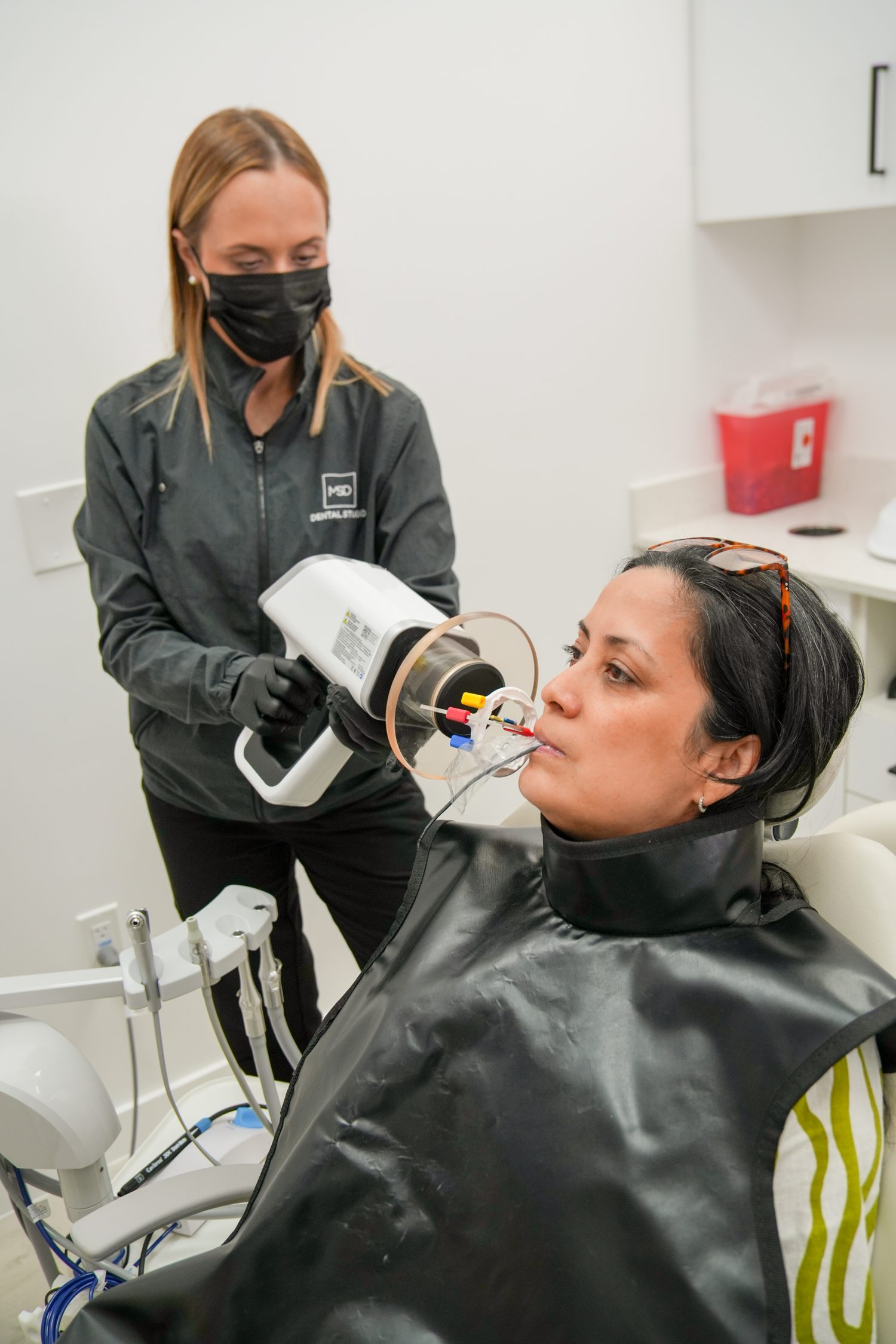
Do I need a bone graft for a dental implant? Only if the site doesn't have enough bone in the right position — which a CBCT 3D scan answers definitively before anything is planned. Many implant sites need no grafting at all. Sites where a tooth has been missing for years, or where infection or gum disease took bone with it, often do. It's a measurement, not a sales variable.
Why bone disappears after a tooth does
The bone that holds a tooth exists because the tooth is there — chewing forces travel down the root and tell the bone it has a job. Remove the tooth and the signal stops. The ridge narrows and shrinks, fastest in the first months, slowly for years afterward. Infection, gum disease, and traumatic extractions accelerate the loss.
None of this hurts, and none of it is visible day to day, which is why it surprises patients years later: the space where a molar came out in 2019 may no longer hold an implant in 2026 without rebuilding first. The biology is ordinary. The planning question is whether anyone got ahead of it.
Socket preservation: the graft that prevents grafts
The cheapest, simplest graft is the one placed the day the tooth comes out.
When a tooth is extracted at MSD and there's any realistic chance the space will one day hold an implant, we talk about socket preservation before the extraction, not after: a bone graft material placed gently into the socket at the same visit, protecting the ridge while it heals. It adds a few minutes to the appointment and little to the recovery — most patients can't tell where the extraction ends and the graft begins.
What it buys is options. A preserved socket typically heals into a ridge that accepts an implant without further surgery. An unpreserved one may too — or may need a larger graft, more healing time, and more cost, months or years later. Whether a specific tooth warrants it depends on the site, your plans, and honest odds you'll ever want the implant; a lower wisdom tooth usually doesn't, a first molar usually does. We'll tell you which yours is.
When more than a socket graft is needed
Sites that lost bone long ago, or lost it to disease, sometimes need rebuilding before an implant is possible:
- Ridge augmentation — rebuilding width or height where the ridge has narrowed, so an implant can sit in bone rather than against it.
- Sinus-area grafting — in the upper back jaw, the sinus sits close above the ridge; when the bone between is too shallow, it's built up before or during implant placement.
- Grafting around gum-disease damage — bone lost to periodontitis is addressed only after the disease itself is controlled; grafting into active infection fails. See our guide on gum disease and when a specialist is needed.
Straightforward grafting is done here. Where a case calls for specialist surgical care — extensive augmentation, complex sinus work — we say so and refer, and we coordinate the implant restoration when you return. That honesty is cheaper for you than optimism.
The scan decides, not the sales script
Every grafting and implant decision at MSD starts with a CBCT 3D scan: exact bone height, width, and density, the position of the nerve and sinus, and the quality of the site — measured, not estimated. Sometimes the scan shows ample bone and shorter timelines than the patient feared. Sometimes it shows a site that needs building. Either way you see the scan yourself, and the plan follows the anatomy. How that planning works from the final tooth backward is covered in how dental implants are really planned — and if you're weighing whether to save the tooth instead of extracting at all, start with save the tooth or replace it, because the best site preservation is sometimes keeping the tooth.
Healing timelines, honestly
A preserved socket typically matures three to six months before implant placement; larger grafts take longer. The timeline is verified rather than assumed — a follow-up scan confirms the bone is ready before the implant is scheduled. Rushing this step is how implants inherit weak foundations, and it's the step where "fast" marketing and durable dentistry part ways. Phasing also spreads cost: extraction and preservation now, implant when the site — and your budget — are ready. What each stage costs is laid out plainly in why implant quotes differ by thousands.
Who does this work
Grafting and implant planning at MSD are handled by Dr. Matthew Dillon (FICOI; Kois Center), working jointly with Dr. Shantall Di Loreto on the restorative plan every graft ultimately serves.
FAQ
Common questions about bone grafting
Do I need a bone graft for a dental implant?
Only if the site doesn't have enough bone in the right position — which a CBCT 3D scan answers definitively before anything is planned. Many implant sites need no grafting at all. Sites where a tooth has been missing for years, or where infection or gum disease took bone with it, often do. It's a measurement, not a sales variable.
What is socket preservation?
A small graft placed into the socket at the time of extraction, so the bone that held the tooth doesn't collapse while the site heals. It's the least invasive graft in dentistry and often prevents the need for a larger one later. If there's any chance you'll want an implant in that space, preserving the socket keeps the option open.
Does bone grafting hurt?
Socket preservation adds little to the extraction experience — most patients can't tell where the extraction ends and the graft begins. Larger grafts involve more healing time and a few days of manageable soreness. Comfort options, including sedation, are available for any of it.
How long does a graft take to heal before an implant?
Typically three to six months for a preserved socket to mature enough for implant placement, and longer for larger grafts. The timeline is verified rather than assumed: a follow-up scan confirms the bone is ready before the implant is scheduled. Rushing this step is how implants inherit weak foundations.
What if I lost my tooth years ago?
Bone loss after extraction is fastest in the first year but continues slowly for years. A site that's been empty a long time may still have ample bone, may need grafting, or may make a different replacement option the sounder plan. The CBCT scan settles it — and all three outcomes are ones we discuss honestly.
Related reading
- How dental implants are really planned
- Save the tooth or replace it?
- Why implant quotes differ by thousands
- Single-tooth implants at MSD
- Replacing missing teeth
Updated August 2026. Educational information, not a substitute for an in-person examination. See our editorial & clinical-review policy.
Facing an extraction, or planning an implant?
A scan shows exactly where you stand. Implant consultations are complimentary.
Schedule an implant consultation Or call or text 754-240-4820