
Tooth Wear & Bite Restoration · Coral Springs, FL
Worn-down teeth can be rebuilt. Start with why they're wearing.
Teeth that are getting shorter, flatter, or more transparent at the edges aren't aging normally — enamel doesn't wear that way on its own schedule. Something is driving it: grinding, acid, or both. Rebuilding the teeth without answering which one is how the new dentistry wears out the same way the old teeth did.
Start with a comprehensive evaluation Call or text 754-240-4820
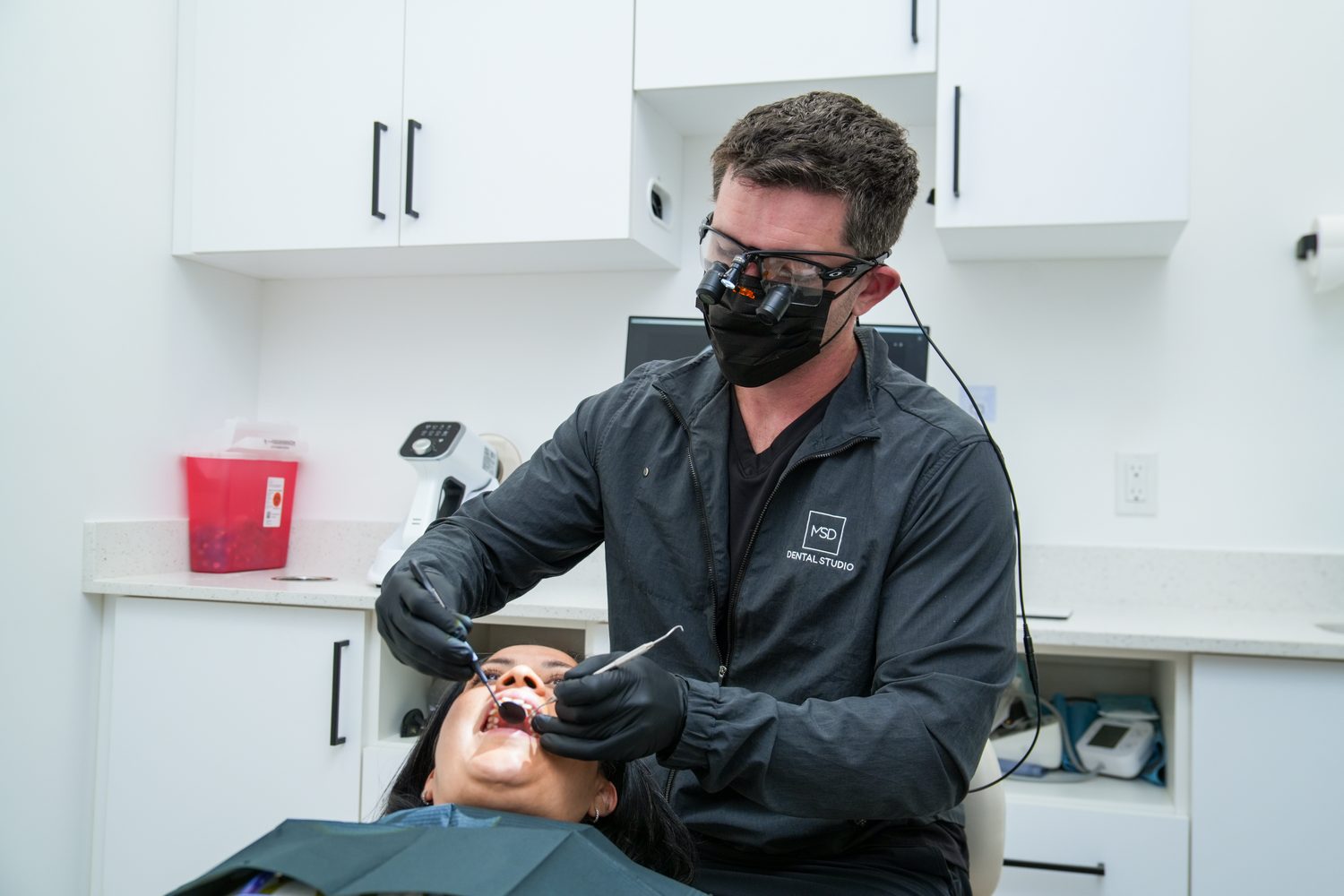
Can worn-down teeth be rebuilt? Yes. Depending on how much structure is lost, worn teeth can be rebuilt with bonded restorations, onlays, or crowns — and in advanced cases the whole bite is restored to its proper height. The essential step comes first: identifying why the teeth wore, because restorations placed into an unaddressed grinding habit or acid problem wear out the same way the teeth did.
The signs patients notice
- Front teeth that look shorter than they used to
- Edges that appear thin, ragged, or translucent
- Flattened, shiny spots on the chewing surfaces
- New sensitivity to cold or sweets as enamel thins
- Small chips that keep appearing
- A bite that feels different — or a face that looks "shorter"
Wear is slow, which is what makes it dangerous: no single month looks different from the last, and by the time the mirror shows it, a lot of enamel is gone. Enamel doesn't grow back. What's lost is lost — which is why the evaluation is worth having when you first notice the signs, not years later.
Why the cause comes before the treatment
Tooth wear has three mechanisms, and they demand different responses:
Attrition — tooth grinding against tooth, usually at night. The fix involves managing the force: a properly designed guard, and restorations engineered for a heavy bite.
Erosion — acid softening enamel until it dissolves or wears at a touch. The acid has a source — diet, reflux, dry mouth — and until the source is managed, every restoration sits in the same acid bath the enamel did.
Abrasion — mechanical wear from outside the bite, classically aggressive brushing. The fix is technique, not dentistry.
Most worn mouths involve more than one mechanism — acid-softened enamel grinds away far faster than healthy enamel, so erosion and attrition compound each other. Reading which combination is at work, from the wear pattern itself, is the diagnostic step that determines everything after it. Our guide Why Are My Teeth Wearing Down? covers the four wear patterns in depth.
Restorations placed into an unsolved wear problem don't stop the wear. They join it.
How we evaluate a worn bite
A wear case gets a comprehensive evaluation, not a filling-by-filling estimate. That means photographs and imaging to document the current state; a wear-pattern analysis to read the mechanism; an acid history where erosion is suspected; and a bite evaluation — because years of wear often shift how the jaw closes, and severe cases lose actual bite height (bite collapse). When the muscles have adapted to a worn position, we may use a deprogrammer to find the jaw's true position before planning anything permanent: how that works. The result is a risk picture — how fast this mouth is wearing, and from what — using the framework in our risk assessment guide.
Treatment, matched to the damage
Protect and monitor
Early wear with a controlled cause often needs no dentistry at all: a night guard where grinding is the driver, the acid source managed, and documented monitoring at defined intervals. Enamel preserved beats enamel replaced.
Bonded restorations
Moderate wear — chipped edges, thinning front teeth — can often be rebuilt additively with bonded restorations that restore shape and protect what remains, while preserving the enamel still there.
Onlays and crowns
Teeth that have lost substantial structure need coverage engineered for the forces that wore them — onlays where walls remain sound, crowns where they don't. Material choice follows the bite, not the drawer.
Rebuilding the bite
When wear has collapsed the bite itself, individual repairs can't solve it — the height has to be restored deliberately, with the new position tested in provisionals before anything is final. That's full-mouth reconstruction, and it's the minority of cases.
The pattern across all four: the amount of dentistry follows the amount of damage, and no restorative work begins until the cause is controlled. Where wear is one problem among several — failing older work, missing teeth, recurring fractures — the plan belongs inside a whole-mouth picture: complex restorative dentistry.
Who does this work
Wear and bite cases at MSD are planned jointly by Dr. Matthew Dillon and Dr. Shantall Di Loreto. Dr. Dillon trained at the Kois Center, where much of modern wear and bite diagnosis was systematized, and holds a Mastership in the Academy of General Dentistry (MAGD). We see wear and bite patients from across North Broward.
FAQ
Common questions about worn teeth
Can worn-down teeth be rebuilt?
Yes. Depending on how much structure is lost, worn teeth can be rebuilt with bonded restorations, onlays, or crowns — and in advanced cases the whole bite is restored to its proper height. The essential step comes first: identifying why the teeth wore, because restorations placed into an unaddressed grinding habit or acid problem wear out the same way the teeth did.
Why are my teeth getting shorter?
Teeth shorten from three mechanisms, often combined: attrition (tooth-on-tooth grinding), erosion (acid softening and dissolving enamel — from diet, reflux, or dry mouth), and abrasion (mechanical wear from things like aggressive brushing). Which mechanism is at work changes the treatment, which is why diagnosis comes before dentistry.
Is a night guard enough?
A night guard protects what's left — it doesn't restore what's gone, and it doesn't help if the wear is from acid rather than grinding. For early wear with a grinding cause, a guard plus monitoring can be the whole plan. For advanced wear, it's one part of a plan that also rebuilds lost structure.
Does rebuilding worn teeth mean crowns on everything?
Not necessarily. Early and moderate wear can often be treated with bonded restorations and onlays that preserve remaining enamel. Full-coverage crowns and complete bite reconstruction are reserved for advanced cases where structure and bite height are substantially lost. The amount of dentistry follows the amount of damage — and the stability of the cause.
Do you treat patients from outside Coral Springs?
Yes. We're on N University Drive in Coral Springs and regularly see adult patients from Parkland, Coconut Creek, Tamarac, Margate, and the surrounding North Broward communities for tooth wear and bite evaluations.
Related reading
- Why are my teeth wearing down?
- Bite collapse: why teeth shift and chip with age
- Finding your true bite: deprogramming explained
- Full-mouth reconstruction
- Complex restorative dentistry at MSD
Updated August 2026. Educational information, not a substitute for an in-person examination. See our editorial & clinical-review policy.
Noticing shorter, flatter, or chipping teeth?
Wear doesn't reverse, but it can be stopped — start with an evaluation that reads the cause first.
Schedule a comprehensive evaluation Or call or text 754-240-4820